
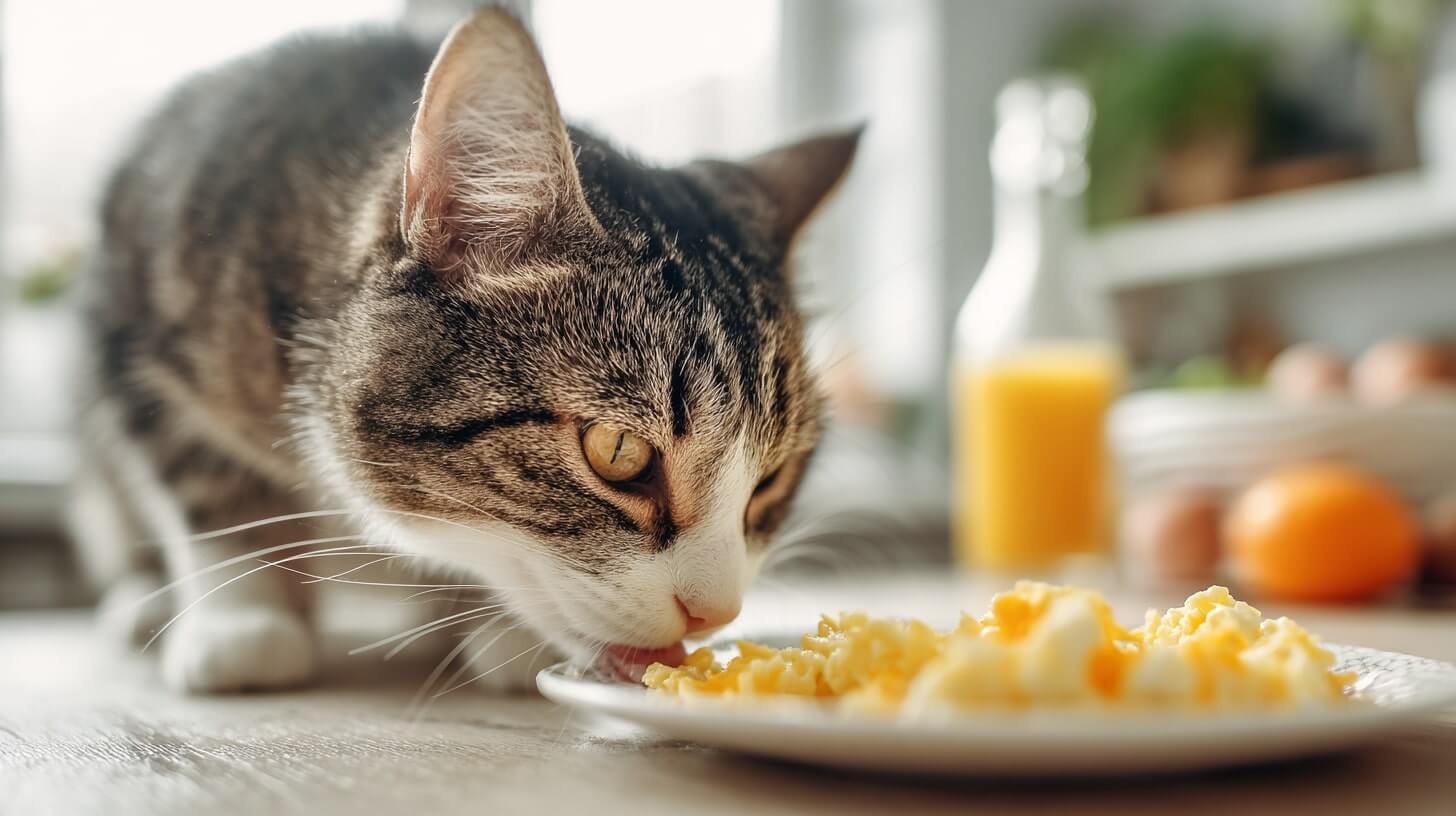
Ever caught your cat eyeing your morning scrambled eggs, whiskers twitching with curiosity? As a cat owner, you might wonder, can cats eat eggs?
This breakfast staple is a protein powerhouse for humans, but is it safe and beneficial for your feline friend? In this guide, we’ll explore the nutritional benefits of eggs for cats, potential risks to watch out for, how to safely prepare eggs, and expert tips to keep your kitty healthy and happy.
Why Consider Eggs for Your Cat?
Eggs are a common household food, affordable and packed with nutrients. Many cat owners are curious about sharing human foods with their pets, especially when those pleading eyes beg for a bite! But before you slide a piece of egg to your cat, it’s important to understand what makes eggs a good (or risky) choice for their diet. Let’s break it down.
Nutritional Benefits of Eggs for Cats
Eggs are a nutrient-dense food that can offer health benefits for cats when fed in moderation. Here’s why eggs can be a great occasional treat:
- High-Quality Protein: Cats are obligate carnivores, meaning they thrive on animal-based proteins. Eggs provide essential amino acids, like taurine, which support muscle development and overall health. A single large egg contains about 6 grams of protein, making it a powerful snack.
- Biotin and B Vitamins: These nutrients promote a shiny coat and healthy skin, helping your cat look and feel their best.
- Choline: This supports brain and liver function, which is crucial for cats of all ages, from playful kittens to senior felines.
- Healthy Fats: Egg yolks contain fats that provide energy and aid in absorbing fat-soluble vitamins.
Fun Fact: Eggs are one of nature’s most complete foods, offering a balance of protein, fats, and vitamins that can complement a cat’s diet. According to PetMD, eggs can be a safe source of protein for cats when prepared properly. However, always consult your vet to ensure eggs fit your cat’s specific dietary needs.
Potential Risks of Feeding Eggs to Cats
While eggs can be a healthy treat, there are risks to consider:
- Salmonella and Bacterial Contamination: Raw or undercooked eggs may carry Salmonella, which can cause vomiting, diarrhea, or more severe illness in cats. Always cook eggs thoroughly.
- Biotin Deficiency: Raw egg whites contain avidin, a protein that can bind to biotin and prevent absorption, potentially leading to skin or coat issues over time. Cooking neutralizes avidin.
- Allergies or Sensitivities: Some cats may be allergic to eggs, showing signs like itching, vomiting, or diarrhea. Introduce eggs gradually and monitor for reactions.
- Overfeeding: Eggs are calorie-dense (about 70 calories per large egg), and too many can contribute to weight gain, especially in less active cats.
- Tip: If your cat shows signs of digestive upset or skin changes after eating eggs, stop feeding them and consult your vet.
Tip: If your cat shows signs of digestive upset or skin changes after eating eggs, stop feeding them and consult your vet.

How to Safely Feed Eggs to Your Cat
To make eggs a safe and tasty treat for your cat, follow these guidelines:
- Cook Thoroughly: Always serve fully cooked eggs to eliminate the risk of Salmonella. Scrambled eggs (without oil, butter, salt, or spices) or plain hard-boiled eggs are great options.
- Portion Control: For an average 10-pound cat, offer 1-2 tablespoons of cooked egg as an occasional treat, no more than once or twice a week. Adjust based on your cat’s size and dietary needs.
- Avoid Additives: Skip ingredients like salt, pepper, onions, or garlic, which are toxic to cats.
- Introduce Gradually: Start with a small amount to ensure your cat tolerates eggs well.
Cat-Safe Egg Recipe:
- Crack one egg into a bowl and whisk lightly.
- Cook in a non-stick pan over medium heat without oil or seasonings until fully set.
- Let the egg cool to room temperature.
- Serve a small portion (1-2 tablespoons) as a treat or mixed with your cat’s regular food.

FAQ: Common Questions About Cats and Eggs
Can Cats Eat Raw Eggs?
No, raw eggs are not recommended due to the risk of Salmonella and biotin deficiency from avidin in raw egg whites. While some pet owners believe raw eggs are more “natural,” cooking preserves the nutritional benefits while eliminating health risks. Veterinary experts, including those from the ASPCA, advise against raw eggs unless part of a vet-supervised raw diet.
Can Cats Eat Egg Yolks or Egg Whites?
Both yolks and whites are safe for cats when cooked. Yolks are richer in fats and calories, while whites are higher in protein. However, serve them together in moderation to provide a balanced treat and avoid overfeeding calories.
How Often Can I Feed My Cat Eggs?
Eggs should be an occasional treat, not a daily meal. For most cats, 1-2 tablespoons once or twice a week is sufficient. Check with your vet to ensure this fits your cat’s overall diet, especially if they’re on a prescription or weight-management food.
What About Eggshells?
Eggshells are not recommended for cats. While they contain calcium, they’re difficult to digest and may pose a choking hazard. If your cat needs extra calcium, consult your vet for safer supplements.
Quick Reference: Egg Dos and Don’ts for Cats
| Do | Don’t |
|---|---|
| Serve fully cooked eggs | Feed raw or undercooked eggs |
| Use plain eggs without additives | Add salt, butter, spices, or toxic ingredients like onions |
| Offer small portions (1-2 tbsp) | Overfeed eggs, which can lead to obesity |
| Monitor for allergies or reactions | Ignore signs of digestive upset |
Conclusion: Eggs Can Be a Purr-fect Treat for Cats
When prepared properly, eggs can be a nutritious and tasty treat for your cat, offering protein, vitamins, and healthy fats. Stick to fully cooked eggs, serve in moderation, and avoid harmful additives.
Always consult your veterinarian before introducing new foods to your cat’s diet, especially if they have health conditions.
Have you tried feeding your cat eggs? Share your experience in the comments below, or check out our other articles on safe human foods for cats and cat nutrition tips for more ways to keep your feline friend healthy!