
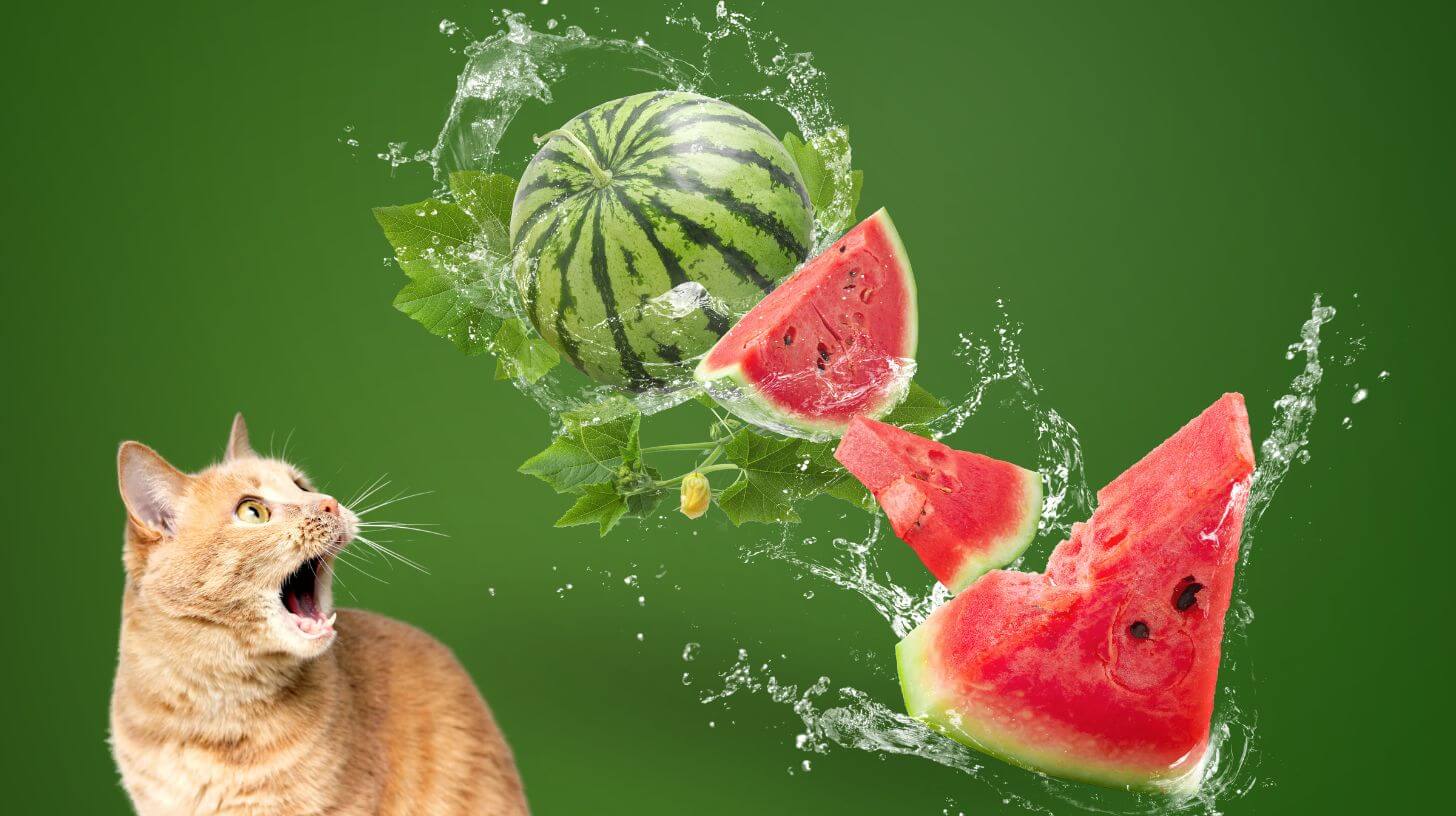
Watermelon is that juicy, refreshing fruit we all love on a hot day, but as a cat owner, you might wonder if it’s okay to share a bite with your furry friend. The good news is, yes, cats can enjoy watermelon in small amounts when prepared properly. This guide upgrades our original article to cover everything you need to know, from safety to serving tips, answering all your questions about cats and watermelon (or even melon in general). We’ll dive into the details with a focus on your cat’s health and happiness.
Table of Contents
Can Cats Eat Watermelon?
Yes, cats can eat watermelon safely as an occasional treat. The flesh is non-toxic and can be a fun, hydrating snack for them.
As a cat owner, I’ve seen my kitty perk up at the sight of a fresh slice during summer. Watermelon is mostly water – about 92%, which helps with hydration, especially if your cat isn’t a big drinker. It also packs some vitamins like A, B6, and C, plus potassium, that can support their overall well-being in tiny doses.
But remember, cats are obligate carnivores, so fruits aren’t a must in their diet. Stick to their regular cat food for main nutrition, and use watermelon as a rare surprise. Overdoing it could lead to tummy troubles from the natural sugars and fiber.
If your cat shows interest, start with a small, seedless piece and watch how they react. Most cats might lick it curiously, but not all will love the taste; mine sometimes just plays with it!
Is Watermelon Safe for Cats?
Yes, watermelon is safe for cats in moderation, but only the flesh part.
From my experience, sharing a bit of watermelon hasn’t caused issues for healthy cats, but preparation is key. Remove all seeds and rind to avoid any risks: seeds have trace cyanide, and the rind is tough on their digestion.
It’s low in calories, making it a guilt-free treat compared to richer snacks. The antioxidants like lycopene might offer minor immune boosts, though cats don’t benefit as much as we do.
Always consult your vet if your cat has health conditions. For most, it’s a safe way to add variety, but watch for any signs of upset like diarrhea.
Can Cats Have Watermelon Every Day?
No, cats should not have watermelon every day; it’s best as an occasional treat.
Daily feeding could add too much sugar, potentially leading to weight gain or blood sugar spikes, especially in diabetic cats. As owners, we know treats are for special moments, not routines.
The high water content is great for hydration, but over time, it might cause loose stools due to excess fiber. Stick to once or twice a week at most to keep things balanced.
My cat gets excited for variety, but I rotate treats to avoid boredom or health hiccups. Better safe than sorry, keep their diet meat-focused.
Can Cats Eat Watermelon Seeds or Rind?
No, cats should not eat watermelon seeds or rind; they can be harmful.
Seeds pose a choking hazard and contain small amounts of cyanide, which is toxic. The rind is indigestible and could cause blockages or upset stomachs.
Always cut away these parts before offering. From owner stories I’ve heard, accidental ingestion often leads to vet visits; it’s better to prevent that.
For melon in general, like cantaloupe or honeydew, the same rules apply: flesh only, in small bits. It’s an easy way to make treats safe.
How Much Watermelon Can Cats Eat?
Cats can eat a small amount of watermelon, like 1-2 teaspoons of flesh, once or twice a week.
Start with a tiny piece to test tolerance, cut it into bite-sized cubes for easy eating. Too much at once might cause diarrhea from the water and sugar.
As a low-calorie option, it’s better than many human foods, but portion control is crucial. For a 10-pound cat, think treat-sized, not meal-replacement.
I’ve found that mashing it a bit helps picky eaters. Monitor after feeding; if all’s well, you can occasionally offer more, but always under vet guidance.
Signs Your Cat Should Not Eat Watermelon
If your cat shows signs of diabetes, obesity, or digestive sensitivities, they should avoid watermelon.
Watch for symptoms like vomiting, diarrhea, or lethargy after trying it; these could indicate an allergy or intolerance, though rare.
Cats with kidney issues might not handle the extra potassium well. From my own caution, I mostly skip fruits for seniors or those on special diets.
If your cat begs but has weight problems, opt for vet-approved alternatives. Always err on the side of caution and chat with your vet first.
Benefits of Watermelon for Cats
While watermelon isn’t a necessary part of a cat’s diet, it does offer some potential benefits when given in moderation:
- Hydration: Watermelon’s high water content can help keep your cat hydrated, especially in hot weather or for cats that don’t drink enough water.
- Vitamins and Minerals: Watermelon contains vitamins A, C, and B6, as well as potassium, which can support overall health in small amounts.
- Low-Calorie Treat: Watermelon is low in calories, making it a better treat option than high-calorie human foods.
- Antioxidants: The fruit contains lycopene, an antioxidant that may support immune health, though cats may not derive significant benefits from it compared to humans.
How to Safely Feed Watermelon to Your Cat
If you decide to offer watermelon to your cat, follow these guidelines to ensure it’s safe and enjoyable:

- Remove Seeds and Rind: Only offer the flesh of the watermelon. Carefully remove all seeds and cut away the rind to prevent choking or digestive issues.
- Cut into Small Pieces: Dice the watermelon into small, bite-sized pieces to make it easier for your cat to eat and digest.
- Start Small: Introduce watermelon gradually by offering a small piece and monitoring your cat for any adverse reactions, such as vomiting or diarrhea.
- Moderation is Key: Limit watermelon to an occasional treat. A small piece (about a teaspoon or two) once or twice a week is sufficient for most cats.
- Consult Your Veterinarian: If your cat has health conditions like diabetes or a sensitive stomach, check with your vet before introducing watermelon.
Can Kittens Eat Watermelon?
Kittens have more sensitive digestive systems than adult cats, so watermelon should be offered with extra caution. Their diet should primarily consist of kitten-specific food to support growth and development. If you want to give your kitten watermelon, offer only a tiny amount of the flesh, and monitor for any digestive upset. Always consult your veterinarian first.
Alternatives to Watermelon for Cats
If you’re looking for other safe treats for your cat, consider these options:
- Cooked Meat: Small pieces of plain, cooked chicken or turkey are excellent protein-rich treats.
- Cat-Safe Vegetables: Small amounts of steamed carrots or green beans can be safe and beneficial.
- Commercial Cat Treats: High-quality, vet-approved cat treats are formulated to meet your cat’s nutritional needs.
- Catnip: Many cats enjoy catnip as a fun, non-food treat.
Frequently Asked Questions
Do cats eat watermelon naturally?
No, cats do not eat watermelon naturally in the wild. As obligate carnivores, their natural diet is meat-based, and they don’t seek out fruits like watermelon. In homes, some might nibble out of curiosity, but it’s not instinctive.
Can kittens eat watermelon?
Yes, kittens can eat small amounts of seedless watermelon as an occasional treat, but kitten food should remain their primary source of nutrition.
Is watermelon better than other fruits for cats?
Watermelon isn’t necessarily better than other cat-safe fruits like blueberries or strawberries, but its high water content makes it great for hydration. All fruits should be treats only, compare benefits, but none replace a balanced diet. Choose based on what your cat likes and tolerates.
Can cats eat watermelon rind?
No. Watermelon rind is difficult for cats to digest and may cause stomach upset or choking hazards.
Can Cats Eat Yellow Watermelon?
Yes. Yellow watermelon is generally safe for cats in small amounts, provided it is seedless and rind-free.
Can cats drink watermelon juice?
Cats can occasionally drink small amounts of plain, fresh watermelon juice, but fresh water remains the healthiest drink for cats.
Conclusion
In summary, cats can safely eat small amounts of seedless, rind-free watermelon as an occasional treat. It can provide hydration and a few nutrients, but it should never replace a balanced, meat-based diet.
Always prepare watermelon properly, feed it in moderation, and consult your veterinarian if you’re unsure about your cat’s specific needs. By following these guidelines, you can safely share a bite of this refreshing fruit with your feline companion!
If you have more questions about what foods are safe for your cat, reach out to your veterinarian for personalized advice.