
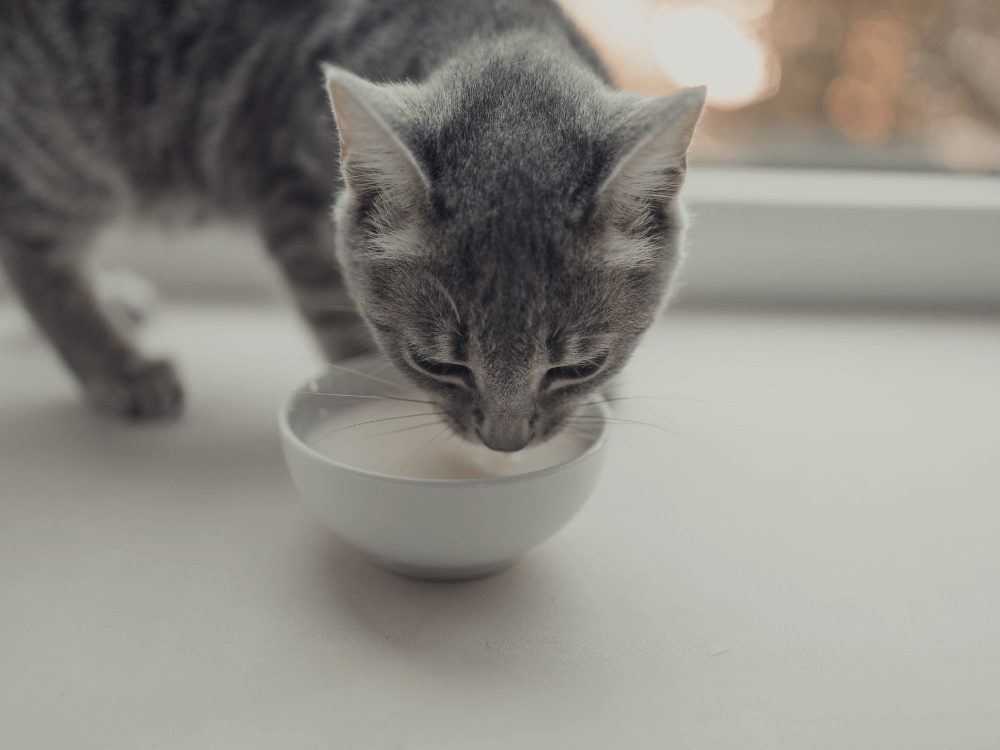
TV shows, movies, and even cartoons often portray cats enjoying a bowl of milk. Can senior cats drink milk?
Table of Contents
When it comes to senior cats (typically 11+ years old), the reality is different. In short, regular cow’s milk is generally not a good idea for senior cats, and most experts recommend skipping it altogether in favor of plain water and a balanced diet.
Why Most Cats, Especially Seniors, Can’t Handle Regular Milk
The main culprit is lactose, the natural sugar in cow’s milk. Kittens produce plenty of the enzyme lactase to break it down while nursing from their mother. But after weaning (usually by 8–12 weeks), lactase production drops sharply in most cats. By adulthood, and even more so in seniors, the vast majority become lactose intolerant.
For senior cats, this intolerance can hit harder because of age-related changes:
- Slower digestion and metabolism
- More sensitive stomachs
- Common issues like kidney problems, reduced mobility, or chronic conditions that make even mild GI upset a bigger deal
If a senior cat drinks cow’s milk, the undigested lactose ferments in the gut, often leading to:
- Diarrhea (sometimes severe)
- Vomiting
- Gas, bloating, and stomach cramps
- General discomfort or lethargy
Even small amounts can trigger these effects, usually showing up within 8 to 12 hours. Plus, cow’s milk is high in fat and calories, which isn’t ideal for less active older cats prone to weight gain. It offers basically no real nutritional benefit that a proper senior cat food can’t provide better, and without the risks.
Water remains the best and safest drink for hydration. Many seniors need encouragement to drink enough (like a pet fountain or wet food), but milk isn’t the answer.

Are There Any Safe Milk Options for Senior Cats?
While plain cow’s milk (whole, skim, or low-fat) is best avoided, a few cat-specific products exist as occasional treats:
- Cat-formulated “milks” like CatSip (a lactose-reduced real milk designed for cats) or similar lactose-free options from brands like Whiskas Cat Milk. These are made to be easier on the digestive system.
- Nutritional supplements like CatSure, which provide added protein, amino acids, and hydration tailored for adult and senior cats, another brand is Choolip Berry Good Milk. It is more like a balanced liquid boost than traditional milk.
These can be given sparingly (think a tablespoon or two as a rare treat, not daily or in large bowls) to avoid extra calories or any lingering upset.
Human lactose-free milk might seem like a workaround, but it’s still not ideal; it often has added sugars, fats, or lacks feline-specific nutrients. Plant-based milks (almond, oat, soy, coconut) are usually a no-go too, thanks to additives, thickeners, salt, or ingredients that can irritate a cat’s stomach.
Can Senior Cats Have Kitten Milk?
Kitten milk replacers (like KMR) aren’t recommended for seniors either; they’re formulated for growing kittens with higher nutrient levels that don’t match older cats’ needs and could still cause issues.

What If Your Senior Cat Already Drank Some Milk?
Don’t panic if it was just a little lick. Watch for signs of upset like soft stool, vomiting, or unusual behavior over the next day. Offer plenty of fresh water and stick to their normal food. If symptoms are mild, they usually pass on their own. But if diarrhea lasts more than 24 hours, there’s vomiting multiple times, or your cat seems lethargic/dehydrated, contact your vet right away; seniors can dehydrate quickly.
Better Ways to Treat Your Senior Cat
Instead of milk, focus on:
- Wet food for extra moisture and appeal
- Low-sodium bone broth (cat-safe, no onion/garlic)
- Senior-specific treats or toppers
- Puzzle feeders to encourage eating/drinking
These keep things enjoyable without the digestive drama.
Bottom Line
Most senior cats shouldn’t drink regular milk due to lactose intolerance and the potential for tummy trouble, plus no real upside. Stick to water as the main drink, and if you want to indulge that milk-loving instinct, opt for cat-specific lactose-reduced products in tiny amounts as an occasional treat.
Every cat is different, so if your senior has specific health issues or seems extra interested in milk, a quick chat with your vet can give personalized advice.
Got a senior cat story about milk or treats? Share in the comments, I’d love to hear how yours handles it!